

A single footprint in soft earth is more than just an impression—it’s a frozen moment in an animal’s life, a data point in a story written in mud, sand, and snow. Wildlife tracking is the ancient art and modern science of reading these stories, transforming simple tracks into profound insights about behavior, ecology, and survival.
Each track tells a physical story:
But the true narrative unfolds when you follow the trail.
1. The Story of Gait & Movement
How an animal moves reveals its immediate intent:
Hunting & Predation: A slow, stalking walk suddenly erupting into a violent scatter of tracks and a scuffed area (the “kill site”). You might see smaller tracks simply… disappear.
Foraging: Meandering, looping patterns with frequent stops, digs, or scratches. Squirrel tracks circling a tree, or a badger’s distinctive digging patches.
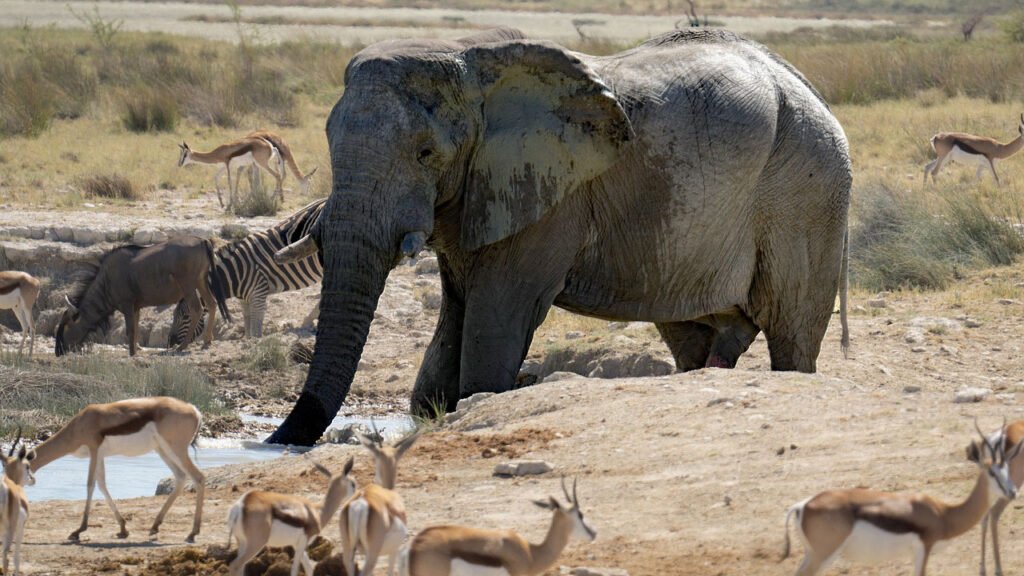
Drinking: A trail leading directly to water’s edge, with concentrated, overlapping prints and perhaps slid marks. A universal behavior snapshot.
Resting: A trail that ends in a large, flattened area with no exit tracks—the animal flew off (bird) or bedded down and then arose to leave (creating a second set of tracks).
A Single, Consistent Trail: A solitary hunter or a territorial animal patrolling alone.
Parallel Trails (Multiple Sizes): A family group. You can often distinguish larger adult tracks from smaller juvenile ones, telling a story of parental guidance.
Overlapping, Interwoven Trails: Social animals, like a pack of wolves or a troop of raccoons, moving in a group. Sometimes shows playful interaction.
Two Trails Converging & Interacting: Could be a predator-prey encounter, a mating ritual, or a territorial confrontation. Look for signs of struggle, circling, or sudden direction changes.
Tracking is fundamental science. Conservationists use track surveys to monitor population health, distribution, and habitat use without intrusive cameras or tags. It’s a low-impact way to confirm the presence of elusive, endangered species.
To read tracks is to practice applied empathy. You must ask:
In the end, a track is a signature. It’s a record of a life being lived by an creature you may never see, but whose journey you can now understand. In the dust, we find not just footprints, but the very pulse of the wild—a direct, tangible connection to the hidden lives moving all around us.
“The earth is a manuscript, being written and rewritten every day by the footsteps of its inhabitants.” — A tracker’s proverb.
bdwebkit says:
good